
Direct answer
The short answer: choose implementation evidence over acronym fluency
A credible AEO or GEO agency should be able to show five things before a contract is signed: the Malaysian questions it will monitor, the current answers and cited sources, the pages and technical systems it intends to change, the people responsible for implementation, and the reporting method that will compare later observations with the same baseline. If any of those elements is missing, the buyer cannot separate real visibility work from a monthly presentation.
AEO usually concentrates on becoming a clear, usable answer. GEO concentrates on the entity, evidence and content relationships that help generative systems understand and recommend a brand. SEO supports both through crawlability, indexation, page ownership and authority. In practice, a buyer does not need three disconnected retainers. The agency should explain which shared foundation it will fix and which output belongs to each objective.
- Dated visibility baseline
- Named pages and implementation owners
- Source-backed content plan
- Technical crawl and entity work
- Repeatable measurement
Buyer preparation
Write your buying brief before comparing agencies
Start with the commercial decision you want search or AI discovery to influence. Examples include finding a provider, comparing a service, validating expertise, understanding cost or choosing between approaches. List the products, services, locations and audiences that matter most, then rank them. Without this prioritisation, an agency can produce a long keyword list while avoiding the questions closest to revenue or customer trust.
Record the constraints as well: who can edit the website, which analytics and search accounts are available, which claims require legal approval, whether content needs English, Bahasa Malaysia or another language, and who can provide subject-matter evidence. Language coverage should follow demonstrated audience demand and operational ability—not a promise to translate every page. This brief gives every agency the same problem to solve and makes proposals comparable.
- Priority audience and buying decision
- Products, services and locations in scope
- Website and analytics access
- Required languages supported by evidence
- Reviewers, compliance limits and launch dates
Measurement baseline
Require a dated Malaysia visibility baseline
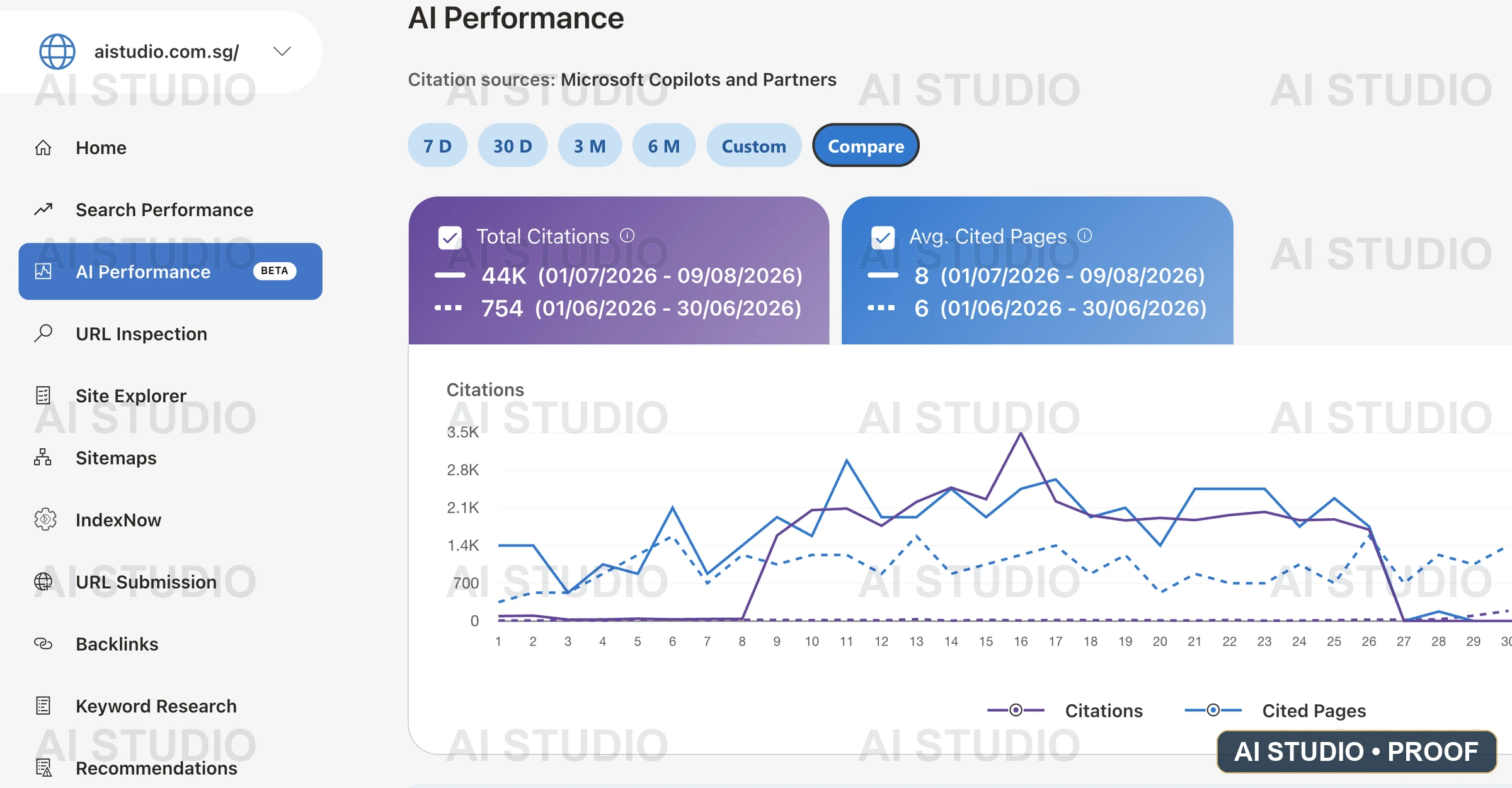
Ask the agency to test an agreed set of buyer questions before it recommends work. The record should show the exact wording, date, platform or search surface, user location or market setting where available, whether the brand appeared, which competitors appeared and which URLs were cited. Screenshots are useful evidence, but they need a structured log so the same questions can be tested again. A collection of favourable examples is not a baseline.
The query set should include branded, category, problem, comparison and decision-stage questions. It should not be changed every month merely to produce a positive chart. Generative answers can vary, so the agency should state how often it tests, how it handles variation and which movements are directional. A baseline cannot promise future visibility; it creates the reference point required to report observed change honestly.
- Exact query and prompt wording
- Malaysia context and test date
- Brand and competitor inclusion
- Cited domains and URLs
- Repeat-test method and stated limitations
Technical capability
Check whether the team can implement technical search foundations
Google's guidance for AI search experiences continues to rely on established search fundamentals: pages must be crawlable, indexable and eligible to appear, with useful visible content. Ask who will inspect robots directives, canonicals, status codes, sitemap coverage, internal links, rendering, structured data and duplicate page ownership. An audit alone is not implementation. The proposal should say whether the agency changes the site, supplies tickets to another team or only reports issues.
Request one anonymised example of a technical problem moving from diagnosis to verified release. Useful evidence includes the original issue, affected page type, recommended change, implementation owner and post-release check. Be cautious when schema is sold as a shortcut to citations. Structured data can clarify visible information, but it cannot replace an accessible page, credible evidence or a coherent brand entity.
- Crawl and indexation review
- Canonical page and query ownership
- Internal linking and rendered-content checks
- Visible-content and schema consistency
- Named implementation and post-release verification
Content and authority
Inspect the content, evidence and entity method
Ask how the agency turns internal expertise into material that a buyer can verify. A useful process identifies the direct answer, supporting explanation, first-party proof, external source requirements, author or reviewer, update owner and related commercial page. The output should improve the page for a person making a decision—not simply add repeated definitions of AEO, GEO and SEO around a target phrase.
Entity work should reconcile factual business details across the website and legitimate profiles, connect services to evidence, and make source ownership clear. It should never invent a Malaysian office, award, client result or local citation. Ask the agency to show which facts are verified, which claims need client approval and which independent sources could genuinely support the topic. If the proposed strategy is mass production before evidence review, the scale increases risk rather than authority.
- Answer-first page brief
- Named sources and claim approval
- Author or subject-matter review
- Entity and service relationship map
- Content update and ownership plan
Malaysia fit
Test Malaysia competence with a category-specific exercise
A Malaysia landing page is not evidence of Malaysia competence. Give shortlisted agencies one real buyer question and ask what would change because the market is Malaysia. A strong answer may discuss local provider sets, relevant government or industry sources, Malaysian English usage, city versus national intent, actual language demand, payment or enquiry behaviour and the relationship between the .my site and any regional domain. The answer should be specific to your category rather than a list of national symbols.
Malaysia also has uneven digital maturity across businesses. DOSM's 2025 establishment release reports widespread web and social usage, but that does not mean every buyer journey or category behaves the same way. The agency should use your search data, customer enquiries, sales conversations and local competitor evidence to decide what deserves a dedicated page. Reject bulk city pages or translations created without distinct intent, evidence and operational coverage.
- Local sources relevant to the category
- Malaysia-specific provider and competitor research
- Language plan tied to actual demand
- Clear .my and regional-domain ownership
- No fabricated premises, proof or doorway pages
Scope comparison
Compare the deliverables line by line
Translate every proposal into a common delivery sheet. For each item, record the quantity, page or system affected, responsible person, review rounds, implementation status and acceptance evidence. 'Strategy', 'optimisation' and 'authority building' are not deliverables until the buyer can see what will be researched, written, changed, published or measured. This step often reveals why two retainers with similar headlines have very different prices.
A complete engagement may include a query baseline, canonical map, technical fixes, priority-page rewrites, source development, entity corrections, internal linking, publisher or profile work and recurring measurement. Not every client needs every item. The agency should explain the dependency order and why each proposed output addresses an observed gap. Reporting without implementation should be priced and described as monitoring, not presented as a full optimisation programme.
- Named deliverable and quantity
- Page, platform or system affected
- Writer, implementer and approver
- Acceptance evidence
- Dependency and delivery date
Reporting
Separate accountable measurement from ranking guarantees
No agency controls whether an independent search or generative platform ranks, cites or recommends a brand. Reject guaranteed placements and ask instead what the agency controls: research quality, agreed releases, technical verification, source accuracy, reporting discipline and response to new evidence. Rankings, citations, indexation and organic enquiries can be measured as outcomes, but each needs its own baseline and limitations.
A useful report shows what shipped, which tracked questions changed, where the brand or competitors appeared, which sources were cited, what remained unchanged and the next action. It should preserve negative and neutral observations rather than report only wins. Where the number of tests or conversions is small, the agency should call the movement directional. Ask for a sample report and check whether a decision-maker can understand what to do next without a separate explanation call.
- Delivery record
- Stable query and page set
- Citation and source changes
- Ranking, indexation and enquiry context
- Limits, interpretation and next action
Buying path
Use a paid representative phase before a long retainer
A sensible first phase covers one commercial topic cluster and the strongest page or page type within it. It should include the baseline, technical diagnosis, content and evidence improvements, implementation path and a repeat measurement date. This is large enough to expose how the team researches, writes, handles approvals and verifies releases, but contained enough to correct the working method before it is repeated across the site.
Agree in advance what completion means. The page should be released or handed over in an implementable state; facts and sources should be approved; technical actions should have owners; and the baseline should be preserved for later comparison. Decide whether the next phase expands, holds or stops based on delivery quality and the evidence discovered—not on a promised citation result within an arbitrary number of days.
- One priority commercial cluster
- One representative page or template
- Technical and content implementation
- Documented acceptance criteria
- Decision point before scale